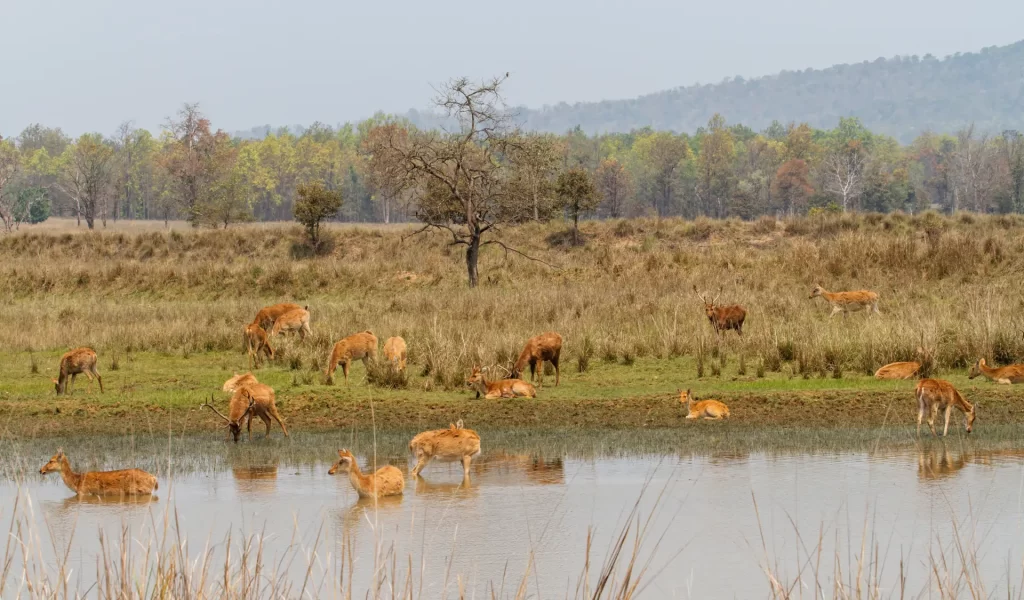
In the grand symphony of Indian wildlife, the spotlight often shines on big cats, elephants, and rhinos. Yet, quietly navigating the forests, grasslands, and wetlands are creatures equally vital to the ecological web “even-toed ungulates”. These hoofed mammals, whose weight is born equally on the third and fourth toes, include deer, antelope, wild pigs, and bovids. They are grazers and browsers, seed dispersers, prey for predators, and indicators of ecosystem health.
While some ungulates like chital or wild boar are still common across much of India, several endangered hooves species teeter on the edge of extinction. Driven to near collapse by habitat loss, hybridization, poaching, and conflict, some survive today only in isolated pockets, remnants of a once richer and more diverse wilderness. In this blog, we focus on India’s endangered hooves and critically endangered even-toed ungulates, their challenges, conservation efforts, and what we must do to ensure they remain part of our shared natural heritage.
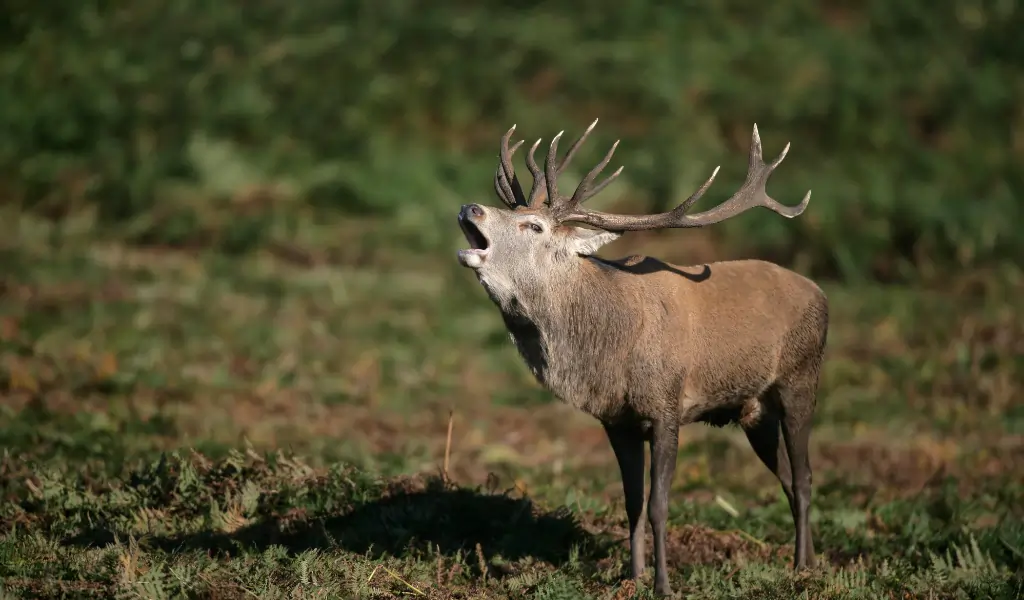
Hangul – The Last Stag of Kashmir
The Hangul, also known as the Kashmir stag, is one of India’s most iconic yet one of the critically endangered hooves. Once found in the vast temperate forests of the Kashmir Valley, Hangul is now restricted almost entirely to the confines of Dachigam National Park near Srinagar. With a population hovering below 300, this majestic deer with its magnificent antlers is fighting a lonely battle for survival.
The threats to Hangul are many and complex. Habitat fragmentation due to expanding agriculture, encroachment, and military activities have severed migration corridors. Overgrazing by domestic livestock reduces forage availability, while feral dogs from neighboring settlements prey on fawns. Perhaps the most insidious threat is its genetic bottleneck, being confined to a single population reduces the chances of long-term survival.
Conservation efforts have been underway for decades. Hangul has been declared the state animal of Jammu & Kashmir, and it is very well protected within Dachigam, in their habitat. However, progress has been slow. What’s needed now is the creation of habitat corridors linking Dachigam with Overa-Aru and other sanctuaries, the regulation of livestock grazing, scientific monitoring of genetic health, and above all, community engagement. The future of Hangul depends on political will, ecological planning, and cultural pride in protecting this emblem of the Kashmir wilderness.
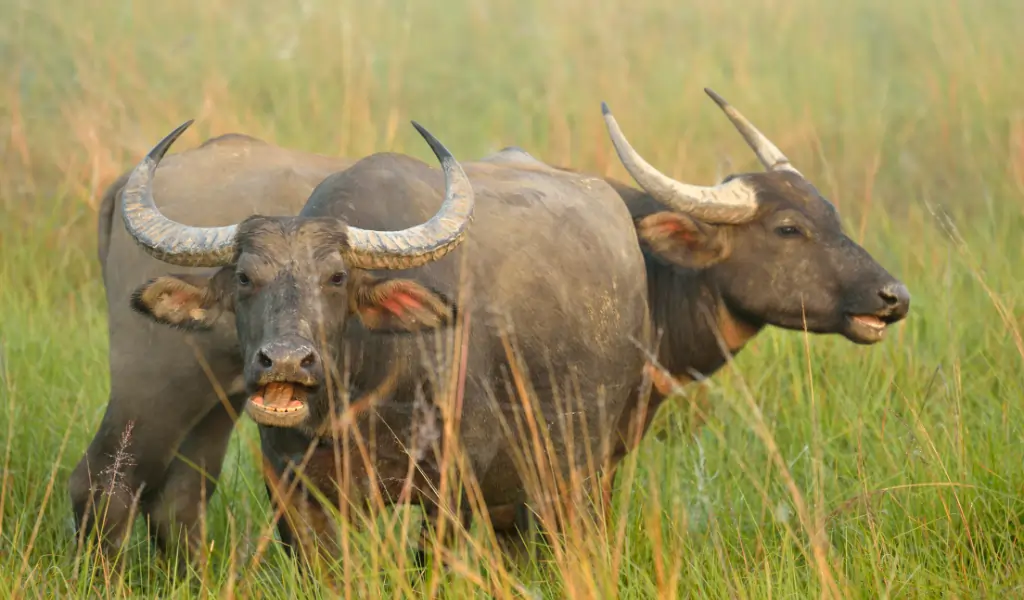
Wild Water Buffalo – Titans of the Wetlands
Towering and powerful, the wild water buffalo is the ancestor of the domestic buffalo and one of the most threatened large mammals in South and Southeast Asia. India holds over 90% of the world’s remaining purebred population, with strongholds in Kaziranga and Manas National Parks in Assam, and small remnant population in Chhattisgarh’s Indravati Tiger Reserve and Udanti wildlife sanctuary.
What makes this species particularly vulnerable is not just its rarity, but the creeping threat of genetic dilution. Hybridization with domestic buffaloes that graze near, or inside protected areas is an ongoing concern. Moreover, poaching, shrinking wetlands, and human-elephant-buffalo conflict further push this species toward a tipping point.
Kaziranga’s vast floodplains still provide some of the best remaining habitats for wild buffalo. Conservation measures here include habitat protection, anti-poaching vigilance, and recent genetic studies to distinguish pure individuals from hybrids. But elsewhere, efforts are fragmented. There is a need for a national-level Wild Buffalo Conservation Plan, focused on creating breeding centers for purebred individuals, enforcing buffer zones to separate domestic herds, and restoring degraded wetland habitats. Without aggressive conservation interventions, the wild water buffalo risks becoming a relic of the past.
Pygmy Hog – The Grassland Ghost
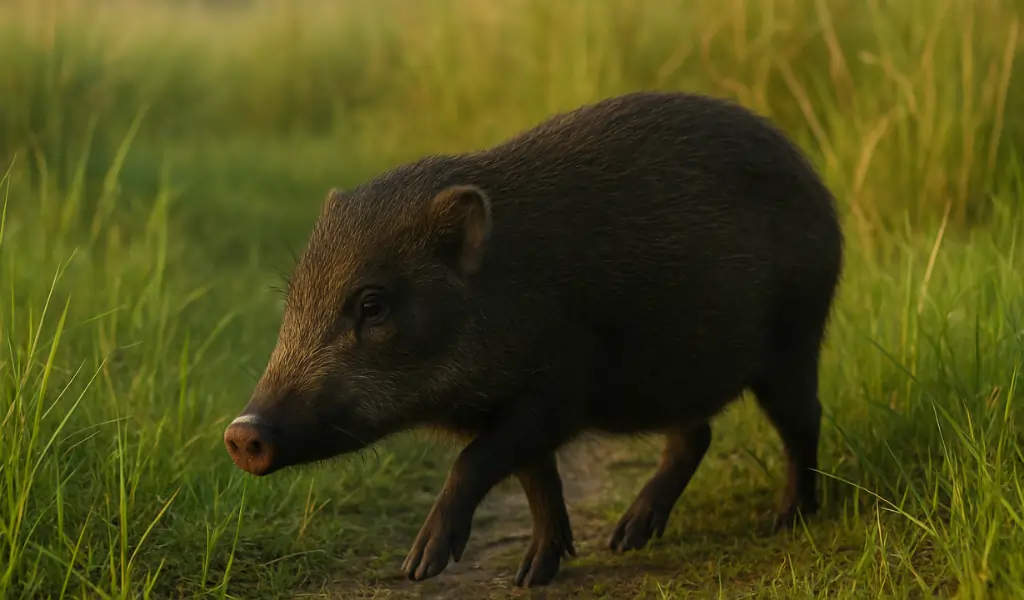
Standing barely 25 centimeters tall at the shoulder, the pygmy hog is the smallest and rarest pig in the world. Once widespread across the tall grasslands of the Brahmaputra floodplains, it was thought extinct until rediscovered in the 1970s. Today, thanks to a groundbreaking initiative ‘the Pygmy Hog Conservation Program (PHCP)’ a small but growing population has been reintroduced into the wild.
The pygmy hog is exquisitely adapted to its habitat, nesting in dense, undisturbed grasslands and feeding on roots, insects, and shoots. Unfortunately, such habitats are among the most endangered ecosystems in India. Grasslands are often misunderstood as “wastelands,” leading to their destruction by conversion to agriculture, burning, and plantation development.
The success of the PHCP, centered in Assam, proves that dedicated, science-backed conservation works. Captive-bred individuals have been released into Manas National Park, and radio-collar monitoring tracks their survival. But challenges remain. Grassland burning during nesting season and human disturbances pose continued threats.
Going forward, conservation must involve grassland-specific policies, proper fire management, and the expansion of release sites beyond Manas. The pygmy hog may be small, but its recovery represents one of the most inspiring wildlife stories in India and a model for future rewilding programs.
Sangai – The Dancing Deer of Loktak
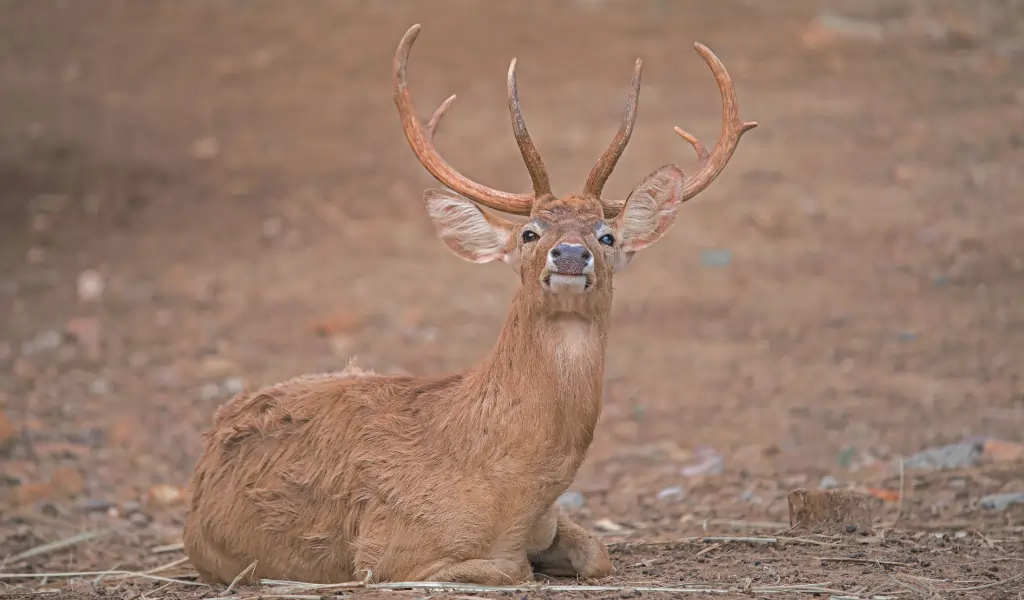
Found nowhere else on Earth, the Sangai, or Manipur brow-antlered deer, survives on the floating biomass also called ‘Phumdis’ of Keibul Lamjao National Park in Loktak Lake. With their delicate gait and elongated antlers, the Sangai appear to dance as they move across the floating ‘phumdis’ making them one of the most unusual deer species globally.
This endangered deer is more than a biological rarity. It is deeply woven into the cultural identity of Manipur and is a symbol of the intimate bond between nature and local communities. Yet, despite its status and reverence, the Sangai remains on the brink of extinction.
The threats stem largely from hydrological changes to Loktak Lake caused by the Ithai Barrage, which altered water levels and prevented natural phumdi regeneration. As phumdis thin, the deer face habitat collapse. Encroachment, fishing activity inside the park, and climate change add to the pressure. Inbreeding is also a serious concern due to the small and isolated population.
Conservation here must go beyond fencing and monitoring. It calls for ecological restoration of the lake, reevaluating water management policies, and expanding protected areas to include adjacent wetlands. Release of captive bred population is also a solution to reduce inbreeding. Local communities must be empowered as custodians through eco-tourism and employment, ensuring that conservation is not just protection, but also pride.
Musk Deer – Endangered Elegance
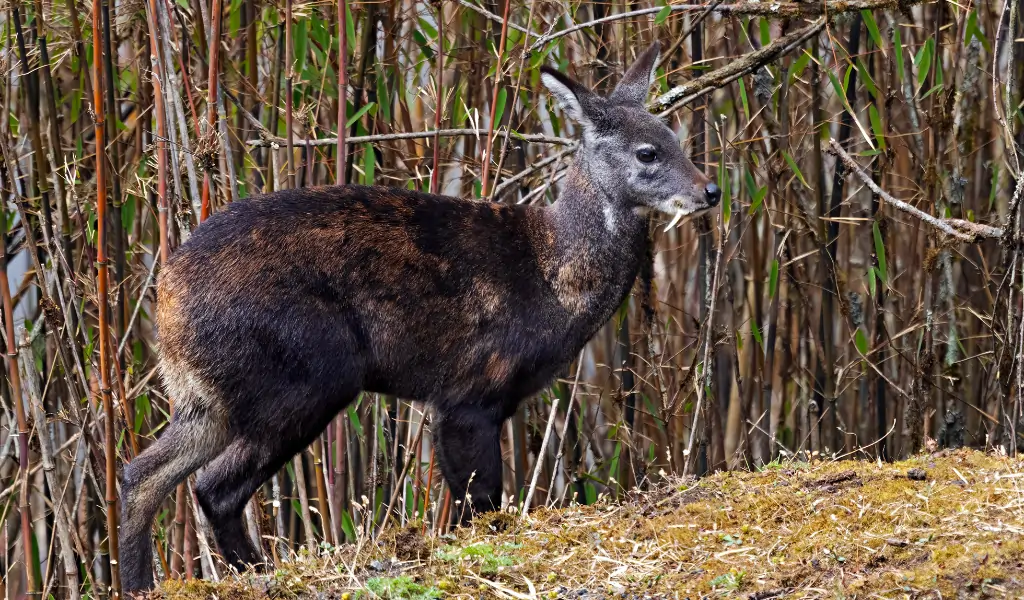
Among India’s elusive and ancient ungulates is a group that often escapes the public eye but is no less fascinating or imperiled ‘Musk deer’. Representing a primitive lineage of even-toed ungulates, India is home to four species: the Kashmir musk deer (Moschus cupreus), Himalayan musk deer (Moschus leucogaster), Alpine musk deer (Moschus chrysogaster), and the Black musk deer (Moschus fuscus). All are classified as Endangered under the IUCN Red List and are found scattered across the higher elevations of the Himalayas, from Jammu & Kashmir and Himachal Pradesh to Uttarakhand, Sikkim, and Arunachal Pradesh.
Unlike other deer, musk deer are antlerless, and males possess long, curved canine teeth. What makes them tragically infamous is the musk gland found in adult males, a small sac that produces musk, which is highly valued in traditional medicine and perfumery. This has led to relentless poaching, despite a total ban on musk trade under CITES and Indian wildlife laws. Habitat degradation due to shifting cultivation, tourism development, and climate change in fragile alpine ecosystems further threatens their survival.
Musk deer are naturally shy, crepuscular, and solitary, making them difficult to study or protect. However, recent camera trap studies and genetic assessments have started providing insights into their distribution and population status. Conservation must now focus on strengthening anti-poaching networks, banning illegal wildlife trade more effectively, and restoring high-altitude forests and meadows. There’s also an urgent need to sensitize local communities and include them in conservation efforts, especially in border areas where protection is weakest. These creatures of the alpine twilight may never roar or trumpet, but their vanishing presence is a quiet tragedy we cannot afford to ignore.
Nilgiri Tahr – Monarch of the Cliffs
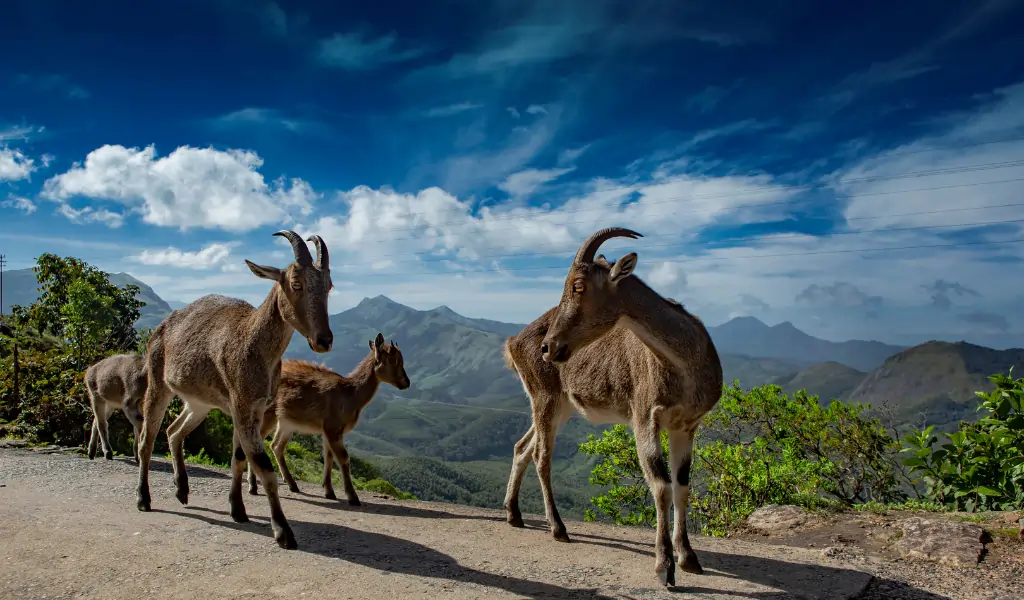
Endemic to the high-altitude cliffs of the Western Ghats, the Nilgiri Tahr is a symbol of South India’s montane grasslands. With their curved horns, muscular build, and confident agility across rocky slopes, these animals are perfectly adapted to an environment that is both beautiful and brutal.
Once widespread across the Ghats, the Nilgiri Tahr saw sharp declines due to hunting, habitat loss, and competition with livestock. The conversion of grasslands into tea and eucalyptus plantations pushed many populations to extinction. Today, an estimated 3,000 survive, primarily in Eravikulam and Mukurthi National Parks, with scattered groups elsewhere in Kerala and Tamil Nadu.
Encouragingly, focused protection in Eravikulam has helped stabilize the population there. But the species remains endangered and vulnerable to climate change, invasive plant species, and tourism-related disturbances, especially during the blooming of Neelakurinji, when visitor numbers spike.
The path forward includes the restoration of native grasslands, removal of invasive species, and possibly establishing a captive breeding facility for rewilding programs in unoccupied habitats. Connecting isolated populations through wildlife corridors and incorporating climate resilience planning into conservation policies are now essential steps.
A Race Against Time
These species, whether clinging to a floating island in Manipur, hiding in Himalayan forests, or tiptoeing through tall grasslands represent India’s forgotten hooves. Their rarity does not make them any less important. In fact, their endangered status is a warning bell, a sign of deeper ecological imbalance and the erosion of ancient habitats.
Conservation of even-toed ungulates demands a shift in how we perceive “lesser-known” species. Tigers, lions, and elephants may win headlines, but the survival of deer, antelope, wild pigs, and goat-antelopes is equally vital to maintaining India’s ecological fabric.
We must move towards ecosystem-level conservation, ensuring that the forests, grasslands, and wetlands that nurture these animals are valued, protected, and restored. It means involving local communities, investing in habitat corridors, advancing research and genetics, and making room for species that cannot speak for themselves.
India has the experience, knowledge, and conservation legacy to turn things around. But we must act quickly—because once these hoofbeats fall silent, they may never return.
Book your tiger and wildlife safari tour with us. Nature Safari India provides the best wildlife exploring experience with our bespoke tiger and wildlife safari tours across India. Visit our Best guide for your next India Tiger Safari Tour page for better planning your safari with us.